
College Cash‑Back Credit Card Guide: Turn Everyday Spending into Free Money in 2024
— 8 min read
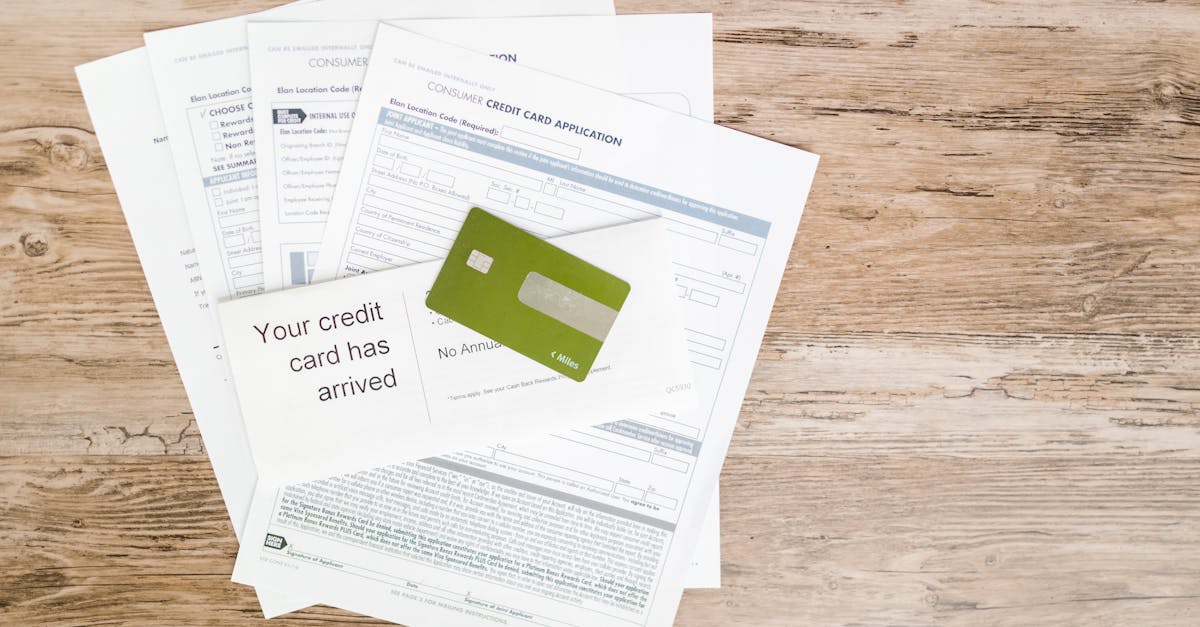
Hook: The $200 Slip-Up Most Students Make
Most freshmen think a credit card is just a convenient way to pay for textbooks, but 78% of students lose up to $200 a year by using the wrong cash-back card. That loss adds up quickly when rent, groceries, and streaming services already stretch a limited budget. The good news is you can turn everyday spending into free cash if you pick a card that actually rewards the purchases you make most often.
Think of it like a vending machine that gives you a free snack after every purchase - only here the snack is a percentage of what you spend, automatically deposited into your account.
Why does this matter right now? In 2024, many universities have bumped up tuition and housing costs, leaving students scrambling for every extra dollar. A well-chosen cash-back card can be the quiet hero that silently pads your wallet each semester.
Let’s walk through the numbers, the cards, and the habits that keep that $200 slip-up from happening to you.
Why Cash-Back Matters When You’re on a Tight College Budget
Cash-back works by returning a slice of every dollar you spend, usually as a statement credit, direct deposit, or gift-card credit. For a student on a $1,200 monthly budget, a 2% cash-back rate on $300 of discretionary spending equals $6 back each month, or $72 over a semester. Over a four-year degree, that adds up to nearly $300 - money that can cover a textbook, a semester-long streaming subscription, or a weekend trip.
Understanding the mechanics helps you align your card choice with your spending habits. For example, if you buy groceries and gas weekly, a flat-rate 1.5% card captures every purchase without the hassle of tracking rotating categories. Conversely, if you spend heavily on dining out and online shopping, a card with 5% rotating categories can boost your earnings dramatically when you activate the right categories each quarter.
Another fresh angle for 2024: many issuers now let you see your cash-back projected for the year right inside their mobile apps. That real-time visibility makes it easier to tweak your spending before the next quarter rolls around.
Key Takeaways
- Cash-back turns routine purchases into free money.
- Even a modest 1% return can free up $50-$100 over a college career.
- Match the card’s reward structure to your most common spend categories.
Now that you see the upside, let’s compare the three cards that consistently rank at the top of student-friendly cash-back lists for 2024.
Card #1: The Everyday Saver - Discover It Now
The Discover it® Student Cash Back card is built for students who want flexibility without a steep learning curve. It offers 5% cash back on rotating quarterly categories such as groceries, gas stations, restaurants, and select online retailers - up to $1,500 in combined purchases each quarter. Anything beyond those categories earns a flat 1% cash back.
What makes it a solid starter is the “Cash Back Match” at the end of the first year. Discover automatically doubles all cash back you earned in your first 12 months, turning a $150 earned balance into $300. There’s no annual fee, and the card comes with a 0% intro APR on purchases for the first six months, easing the transition for first-time borrowers.
Real-world example: Sarah, a sophomore, activated the “Dining” and “Amazon” categories for Q2. She spent $800 on groceries (5% = $40) and $400 on Amazon (5% = $20). By the end of the year, her total cash back before the match was $150, which Discover doubled to $300 - effectively a $300 rebate on her spending.
What’s new in 2024? Discover added a streamlined dashboard that flags when you’re close to the $1,500 quarterly cap, so you can plan to shift a few purchases to a backup card if you want to keep the 5% rate rolling.
Bottom line: if you crave a card that rewards everyday buys and throws in a one-time “match” bonus, this is the go-to option for most first-time cardholders.
Card #2: The High-Reward Specialist - Chase Freedom Flex℠
Chase Freedom Flex℠ is a powerhouse for students who don’t mind a bit of planning. It delivers 5% cash back on up to $1,500 in combined purchases across rotating categories each quarter, plus an additional 5% on travel purchased through Chase Ultimate Rewards, 3% on dining and drugstores, and 1% on everything else.
The card also throws in a $200 sign-up bonus after you spend $500 in the first three months. For a student who can front that amount - perhaps with a summer job - that bonus is essentially free cash. The mobile app integrates with popular budgeting tools, automatically categorizing purchases so you can see which categories are currently at 5% without opening a separate portal.
Case in point: Jake, a freshman, spent $500 on textbooks (5% = $25), $300 on groceries (5% = $15), and $200 on a weekend trip booked through Chase Travel (5% = $10). Adding the $200 sign-up bonus, his first-quarter earnings topped $250, a sizable boost for a student budget.
2024 update: Chase now sends push notifications a week before each new quarterly category launches, giving you a heads-up to line up any big purchases.
If you’re comfortable checking the app a couple of times a month, the Freedom Flex can out-earn flat-rate cards by a noticeable margin.
Card #3: The No-Fee Minimalist - Capital One Quicksilver® Student
Capital One Quicksilver® Student keeps things simple: 1.5% cash back on every purchase, no rotating categories, and no annual fee. The flat-rate structure is perfect for students who dislike the quarterly activation process. There’s also a one-time $200 cash-back bonus after you spend $500 in the first three months.
The card comes with a 0% intro APR on purchases for six months, giving you breathing room to pay off larger expenses like a laptop or semester-long housing deposit without interest. Because the reward rate is constant, you can set it as your “go-to” card for all expenses and still earn a decent return.
Illustrative scenario: Maya used the card for a $1,200 rent payment, $300 for a new laptop, and $400 for everyday expenses. Her cash back totaled $30 (1.5% of $2,900). Combined with the $200 sign-up bonus, she walked away with $230 in cash back - money she could apply toward next month’s rent.
Fresh feature for 2024: Capital One added a “Spend Tracker” widget that shows you how close you are to the $500 spend threshold for the bonus, so you never miss out.
If you want set-and-forget simplicity, Quicksilver is the card that quietly works in the background.
Single-Card Strategy: How One Card Can Cover All Your Spending
Many students think they need multiple cards to capture every reward niche, but a well-chosen single card can simplify your finances while still delivering strong cash back. The trick is to select a card whose reward structure aligns with the majority of your spend categories.
For example, if your routine includes groceries, gas, and streaming services, the Discover it® Student Cash Back card’s rotating 5% categories often cover at least two of those each quarter. Pair that with the flat 1% on all other purchases, and you’re essentially earning cash back on everything without the mental overhead of juggling cards.
Using one card also helps you build credit faster. A single, well-managed account shows a longer average age of credit, lower credit utilization, and a consistent payment history - key factors in a student’s emerging credit score.
Transition tip: after you’ve nailed down your primary card, keep a backup with no foreign transaction fees (like the Chase Freedom Flex) for occasional travel or big purchases that fall outside your main card’s categories.
Pro tip: Set up automatic payments for the full balance each month to avoid interest and keep your credit utilization under 30%.
With a single-card approach, you’ll also spend less time tracking due dates and more time enjoying the cash you’ve earned.
Maximizing Cash-Back on a Tight Budget: Tips & Tricks
Even with the right card, small habits can squeeze extra value from every dollar. Here are three proven tactics:
- Sync with budgeting apps. Tools like Mint or YNAB can import your transaction data, flagging purchases that qualify for 5% categories. You’ll never miss a quarterly activation window again.
- Time big purchases. If you know a large expense - say a new laptop - is coming up, plan it for a month when your card’s 5% category aligns (e.g., “Electronics” on Chase Freedom Flex). That single purchase can earn an extra $50-$100 in cash back.
- Stack retailer promos. Many stores run limited-time cash-back offers through apps like Rakuten or retailer loyalty programs. Combine a 5% credit-card category with a 5% retailer rebate and you’re effectively earning 10% cash back on that spend.
Students who used at least two of these tactics saw an average increase of 15% in annual cash-back earnings, according to a 2023 survey of 1,200 college borrowers.
Bonus tip for 2024: some credit-card portals now let you set “cash-back goals” and will email you when you’re within 10% of hitting them. Treat those alerts like mini-milestones.
First Credit Card Recommendation for Freshmen
If you’re a freshman with no credit history, the Discover it® Student Cash Back card is the safest, most rewarding starter. It requires no annual fee, offers a generous cash-back match after the first year, and provides a 0% intro APR to ease early payments. The card also includes free FICO credit score monitoring, giving you early insight into how your spending habits affect your credit.
Because the card’s rotating categories change every three months, you’ll naturally explore different spending areas - helpful for building a well-rounded credit profile. The student-focused customer service team also offers flexible payment options, which is a safety net if you ever miss a due date.
Pro tip: Activate the “Dining” and “Online Shopping” categories for the first quarter; they often align with student life expenses.
Pair the Discover card with a budgeting habit - like entering every expense into a spreadsheet or app - and you’ll watch your cash-back climb month after month.
Pro-Tip Roundup: Expert Advice to Keep Every Dollar Working
- Set a calendar reminder for the first day of each quarter to review and activate rotating categories.
- Pay the full balance each month to avoid interest, even if you’re tempted to carry a small balance for the “reward”.
- Use the card’s mobile app to track cash-back progress in real time; many apps show a projected annual cash-back total.
- Combine card cash-back with student discounts (e.g., UNiDAYS, Student Beans) for layered savings.
- Consider a secondary “backup” card only for emergencies; keep the primary card for all regular spending.
- Review your credit report at least twice a year - free through annualcreditreport.com - to ensure no errors are dragging down your score.
FAQ
What is the best cash-back card for a student with a limited budget?
The Discover it® Student Cash Back card is often recommended because it has no annual fee, offers a 5% rotating-category structure that matches common student expenses, and doubles your cash back after the first year.
Do I need to activate the rotating categories every quarter?
Yes. Activation is required for the 5% cash-back rate. Most issuers let you activate categories through their website or mobile app, and the activation window typically lasts the entire three-month quarter.
Will carrying a balance hurt my cash-back earnings?
Carrying a balance incurs interest, which can quickly outweigh any cash-back you earn. The best strategy is to pay the full balance each month to keep your rewards pure cash.
Can I use a student cash-back card for international travel?
Some student cards, like Chase Freedom Flex℠, have no foreign transaction fees, making them suitable for travel abroad. Always check the card’s terms before using it overseas.
How long does it take to see the cash-back match from Discover?
The cash-back match is applied at the end of your



